
Paul Novus filters



-
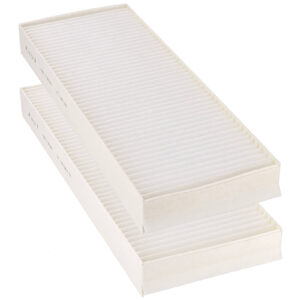 House brandExtract filter size: 475x180x50 mmSupply filter size: 475x180x50 mmFilter class (EN779): G4+F7Filter quantity in a set: 2 filtersProtection level
Filter protection level indicates efficiency in blocking particles or contaminants, varying by standard and application.
BasicGeneral dust and particle filtration
Pollen and moldCaptures pollen, mold spores, and other allergens
Smog and bacteriaProtects against allergens and urban pollution
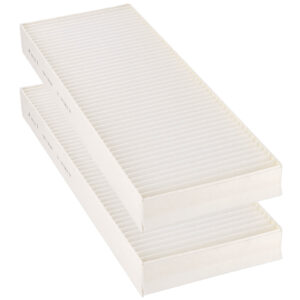 House brandExtract filter size: 475x180x50 mmSupply filter size: 475x180x50 mmFilter class (EN779): G4+G4Filter quantity in a set: 2 filtersProtection level
Filter protection level indicates efficiency in blocking particles or contaminants, varying by standard and application.
BasicGeneral dust and particle filtration
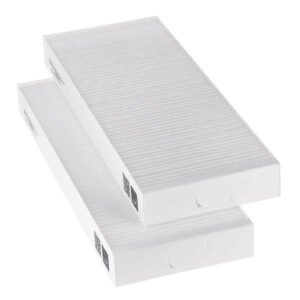 OriginalExtract filter size: 475x180x50 mmSupply filter size: 475x180x50 mmFilter class (EN779): G4+F7Filter quantity in a set: 2 filtersProtection level
Filter protection level indicates efficiency in blocking particles or contaminants, varying by standard and application.
BasicGeneral dust and particle filtration
Pollen and moldCaptures pollen, mold spores, and other allergens
Smog and bacteriaProtects against allergens and urban pollution
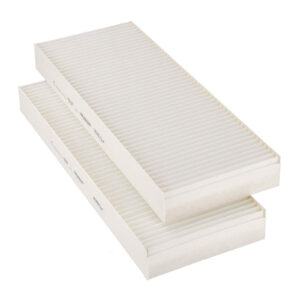 OriginalExtract filter size: 475x180x50 mmSupply filter size: 475x180x50 mmFilter class (EN779): G4+F7Filter quantity in a set: 2 filtersProtection level
Filter protection level indicates efficiency in blocking particles or contaminants, varying by standard and application.
BasicGeneral dust and particle filtration
Pollen and moldCaptures pollen, mold spores, and other allergens
Smog and bacteriaProtects against allergens and urban pollution
1-4 of 4Need Help? Start Here.
We’ve gathered answers to the most common questions about our products and services. If you can’t find an answer here, please contact us directly.
What is the Paul ISO Defroster DN 160 filter, and how is it different from the unit’s filters?

The Paul ISO Defroster DN 160 is a separate device mounted in the DN 160 outdoor-air duct ahead of the heat recovery unit, and it has its own filter. We stock a house brand G4 filter for it, which captures coarse dust.
This filter is not part of the heat recovery unit's filter set, so it is changed and ordered separately – specify the device and the DN 160 diameter rather than the unit's model.
What filter classes are used in Paul heat recovery units?
It depends on the model. The Paul filter sets we stock come in these combinations:
- Novus 300/450 and Focus 200 — G4+G4, or G4+F7 with a fine F7 (ePM1) supply filter
- Climos (F) 200 — M5+M5, or M5+F7
Because Passive House buildings get all their fresh air through the MVHR unit, the version with the F7 supply filter is usually the better choice for indoor air quality.
How do I find the right filters for my Paul heat recovery unit (Climos, Novus, Focus)?
Paul heat recovery units come in several series, and we stock filter sets for the Climos (F) 200, Novus 300/450 and Focus 200. The exact model is shown on the unit's front panel.
The Focus 200 takes its own filter size, the Novus 300 and Novus 450 share one set, and the Climos (F) 200 uses a different size again. If you can't find the model code, measure your current filter – that way you can be sure of an exact match when ordering.
Is it worth choosing an equivalent filter instead of an original Paul one?
Yes, as long as the filter is made to the same ISO 16890 standards and matches the original's dimensions exactly. Our equivalent Paul filters:
- are manufactured in the EU from the same quality filtering fibre
- are cut to the same tolerances as the original filter
- fit without any modification to the housing
Since filters need to be replaced several times a year, and in a passive house they play a particularly important role in air quality, an equivalent lets you save money without reducing either filtration efficiency or the unit's operating reliability.
How often should Paul heat recovery unit filters be replaced?
The standard interval is 3–6 months, but in passive houses, where the recovery unit is the sole source of fresh air, it's recommended to check the filters more often – every 2–3 months, especially the F7 filter on the supply air side. A clogged filter not only worsens indoor air quality but also increases the load on the fan and energy consumption, since the unit has to work against greater resistance.
During pollen season (April–June), it's worth checking the filter every month.
I have a Passive House with a Paul unit – is an F7/ePM1 supply filter enough for pollen allergies, or should I go higher?
For most allergy sufferers, a good-quality F7/ePM1 supply filter already removes the vast majority of pollen and fine dust, and F7 is the finest class we offer for Paul units (G4+F7 for the Novus 300/450 and Focus 200, M5+F7 for the Climos (F) 200). Since a Passive House gets practically all of its fresh air through the MVHR unit, that filter is the only barrier between outdoor pollen and your living rooms – so keeping it fresh matters most. During pollen season, check the supply filter monthly, replace it as soon as it turns grey, and keep a spare set at home.
Still Have Questions?
Support details to capture customers that might be on the fence.
Contact Us Now


