
Oxygen Easy V400E filters



-
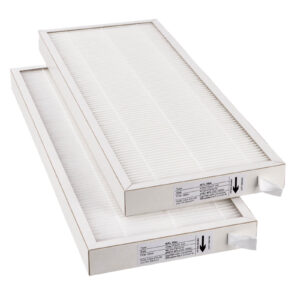 House brandExtract filter size: 434x172x31 mmSupply filter size: 434x172x31 mmFilter class (EN779): M5+F7Filter quantity in a set: 2 filtersProtection level
Filter protection level indicates efficiency in blocking particles or contaminants, varying by standard and application.
BasicGeneral dust and particle filtration
Pollen and moldCaptures pollen, mold spores, and other allergens
Smog and bacteriaProtects against allergens and urban pollution
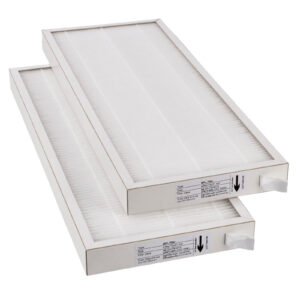 House brandExtract filter size: 434x172x31 mmSupply filter size: 434x172x31 mmFilter class (EN779): M5+M5Filter quantity in a set: 2 filtersProtection level
Filter protection level indicates efficiency in blocking particles or contaminants, varying by standard and application.
BasicGeneral dust and particle filtration
Pollen and moldCaptures pollen, mold spores, and other allergens
1-2 of 2


Need Help? Start Here.
We’ve gathered answers to the most common questions about our products and services. If you can’t find an answer here, please contact us directly.
How do I know which filter fits my Oxygen heat recovery unit?


The model designation is usually printed on the front cover near the filter access panel. We stock filter sets for Oxygen Easy and X-Air units, which fall into three size groups:
- C180/C180E, C200/C200E and C250 – one shared size
- V200/V200E – its own size
- V400/V400E/V500/V500E/V600 – its own size
If the label is worn or missing, measure your existing filter (length, width, thickness) to confirm the right replacement.
Do the Oxygen X-Air C200 and C200E use the same size filters?
Yes. The letter "E" in an Oxygen model name simply indicates a built-in electric heater for warming the incoming air – the unit's housing and filter compartment are identical in construction. That means the X-Air C200 and X-Air C200E use exactly the same size filters, and you can order them under either model name.
The same rule applies to the other pairs – C180/C180E, and V200/V200E, V400/V400E and V500/V500E.
What filter classes are used in Oxygen heat recovery units?
Our Oxygen filter sets come in two versions:
- M5+M5 – for general dust retention
- M5+F7 – with a fine F7 (ePM1) supply filter for better protection against pollen and fine particles
Both versions fit the same filter cassette without any modifications – only the filter class changes, not the size.
Is it worth choosing an equivalent filter instead of an original Oxygen one?
Yes – our equivalent filters match original Oxygen filters on all the parameters that matter:
- Manufactured in the EU
- Meet the same ISO 16890 filtration class standards (M5, F7)
- Cut to the same dimensional tolerances
Since filters need replacing several times a year, the price difference adds up noticeably over a year, while filtration quality and airflow throughput don't suffer – which makes equivalents a rational choice for routine maintenance, not a compromise.
How often should Oxygen heat recovery unit filters be replaced?
The recommended standard replacement interval is 3–6 months, but the exact timing depends on the environment – in the city or near a road, dust builds up faster than in a rural area. An F7 class filter, which captures finer particles, usually needs replacing a bit more often than an M5, since its fibre clogs faster.
In spring and summer, during pollen season, it's worth checking the filter every 4–6 weeks, especially if there are people with allergies in the household.
Can I replace Oxygen X-Air filters myself?
Yes – replacing filters in Oxygen X-Air units is a simple job that doesn't require a technician or tools. Switch the unit off, open the front cover, slide out the old filters and note which side was extract and which was supply, then insert the new ones in the same orientation, following the airflow arrow on the filter frame. Close the cover, switch the unit back on and, if your model has a filter timer, reset it on the control panel. The whole process takes only a few minutes.
Still Have Questions?
Support details to capture customers that might be on the fence.
Contact Us Now
